1. Overview
SQLTelebot is an SQLMessenger plugin. It enables you to send bulk messages to your Telegram contacts锟斤拷for example, you can deliver each customer锟斤拷s billing statement directly to them via Telegram.
In addition to bulk message distribution, SQLTelebot also offers the following features:
- Forward Telegram messages to email
- Forward emails to Telegram
- Convert email body to an image or PDF and forward it to telegram
- Forward email attachments to Telegram
- Send each row of an Excel sheet as a separate message to your Telegram contacts
This document demonstrates how to use SQLTelebot to send Telegram messages in bulk.
- Note: Before getting started with SQLTelebot, ensure you have completed the following:
- 1. Install the SQLTelebot plugin in SQLMessenger. Details
- 2. Create a bot in Telegram. Details
- 3. Configure your bot in SQLTelebot. Details
2. Example: Sending Messages in Bulk
A shopping mall sends a gift each month to customers who have birthdays during that month, and notifies each customer about their gift via Telegram. The steps below show how to use SQLTelebot to send these messages.
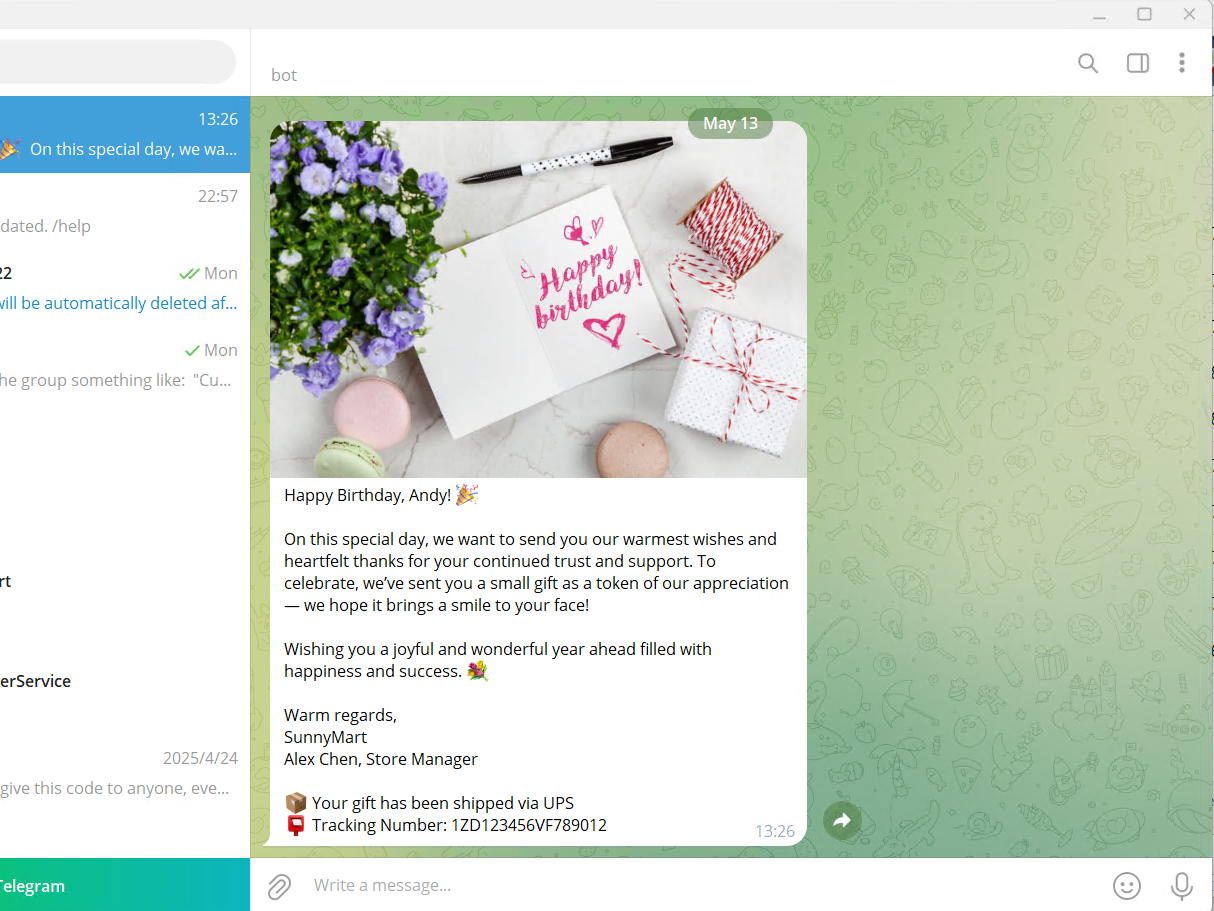
Message sent from the mall to the customer
Step 1: Prepare the messages in an Excel sheet.
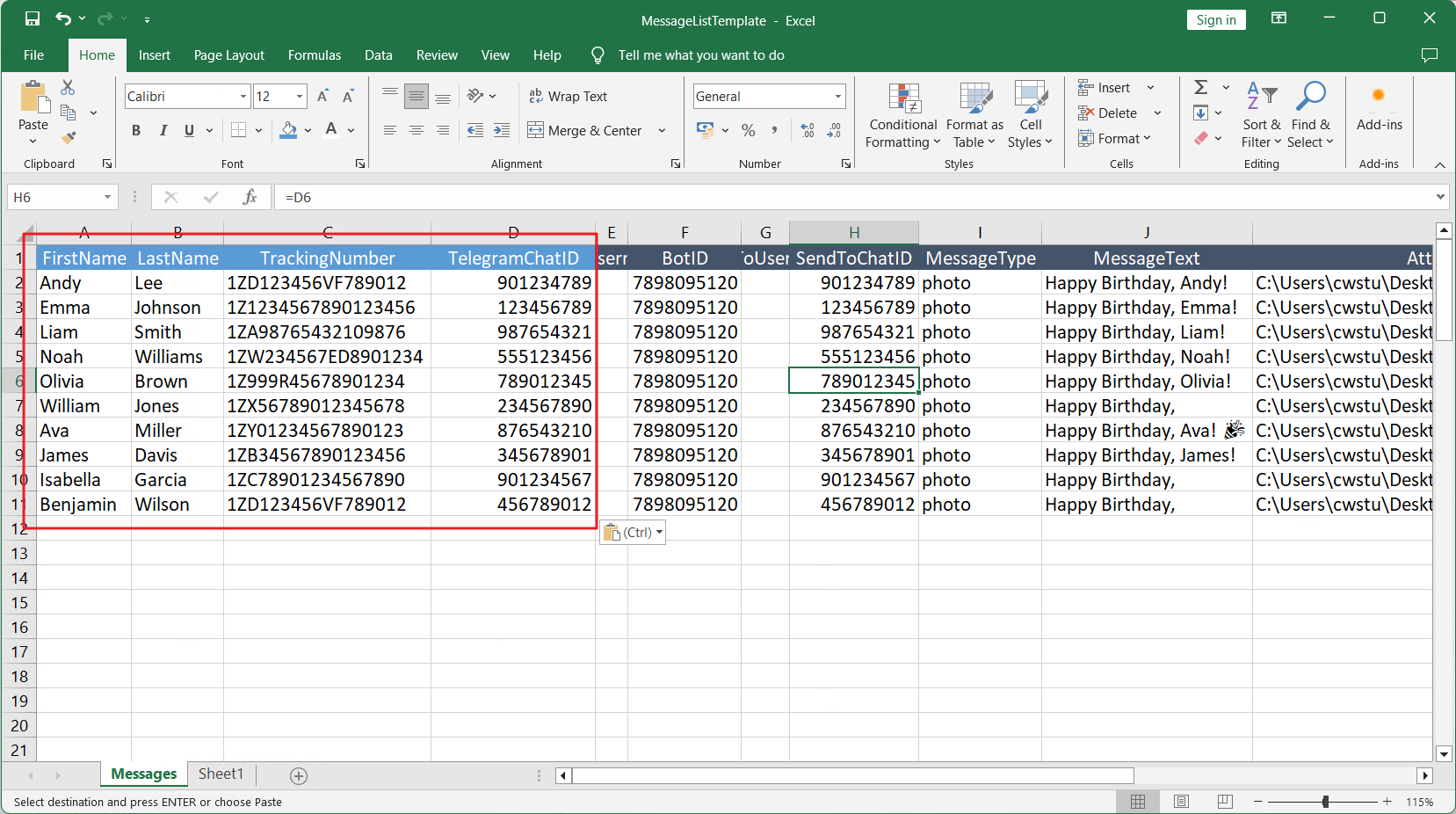
You may use Excel formulas to flexibly construct the message content and specify an image for each message.
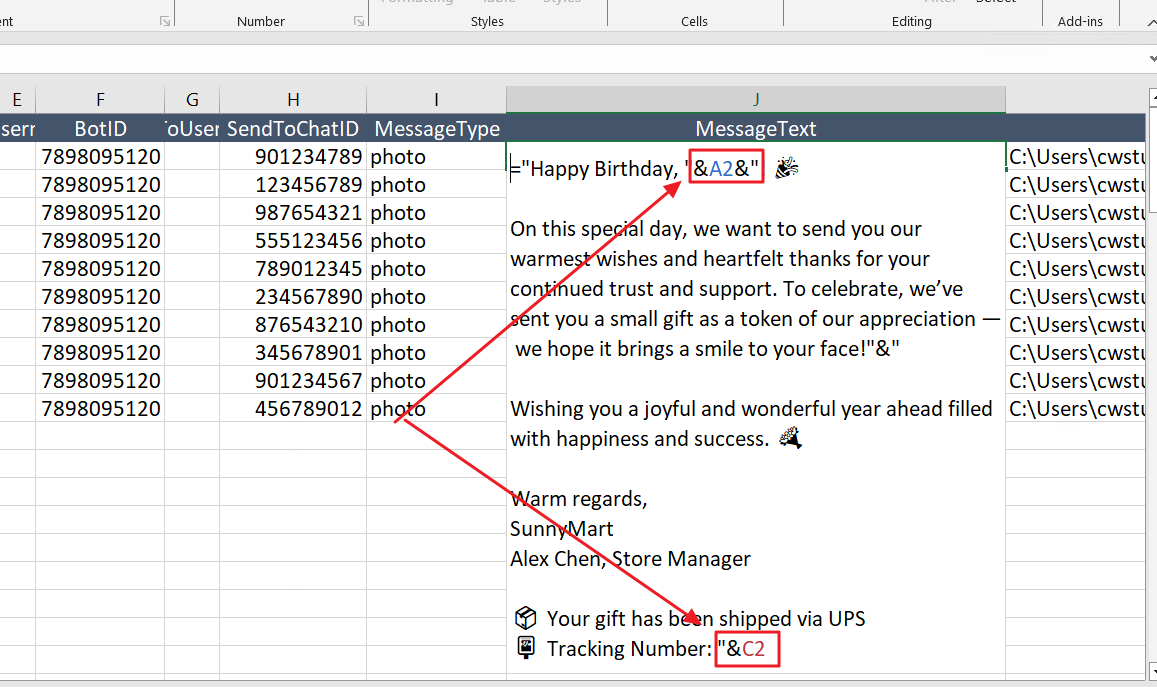
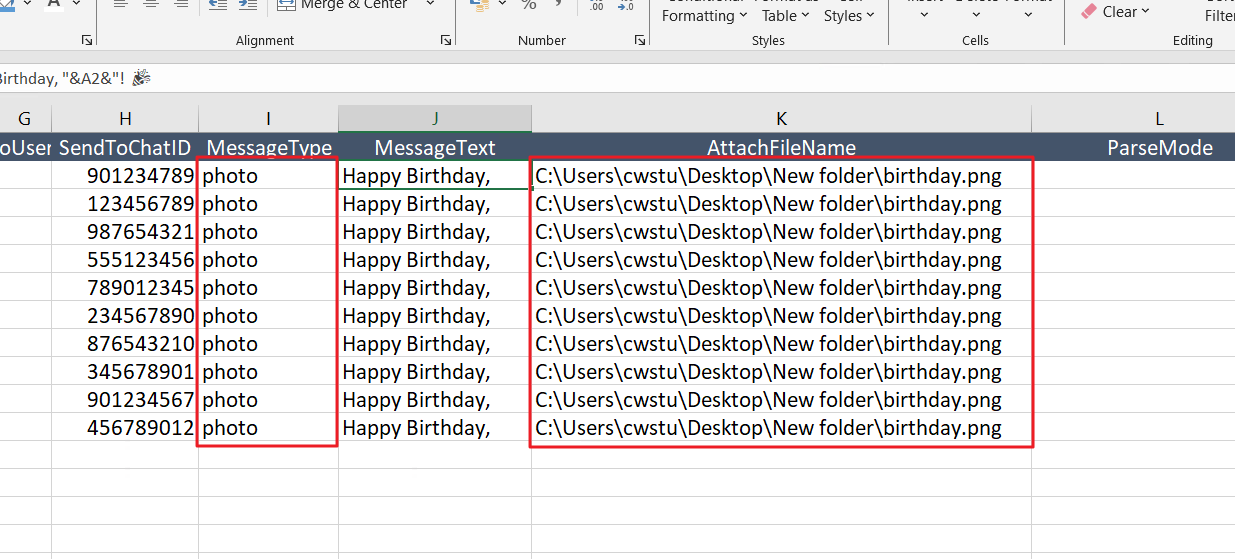
Add an image file to the message
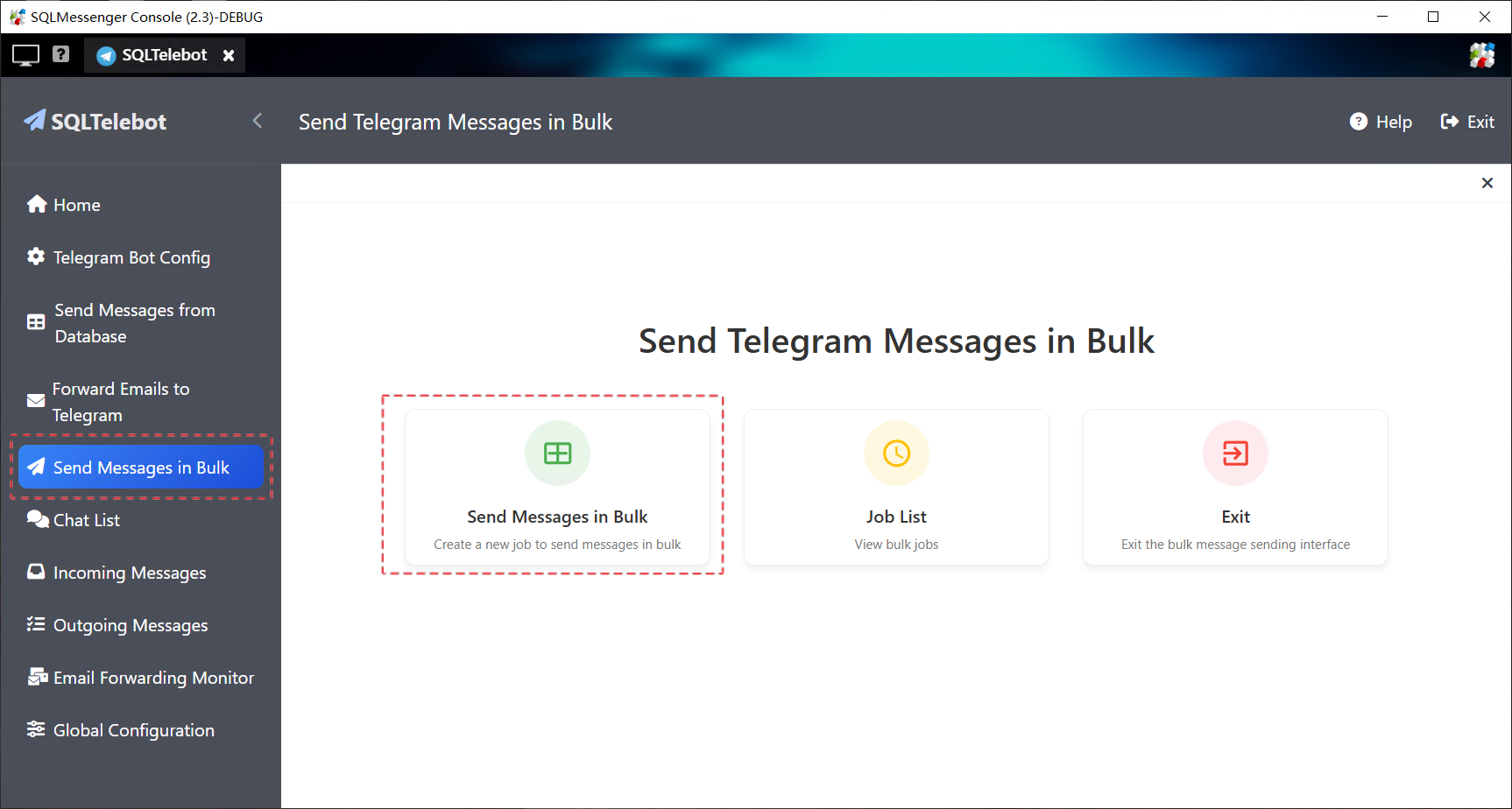
Step 2: After completing the Excel sheet, create a Bulk Message Task in SQLTelebot.
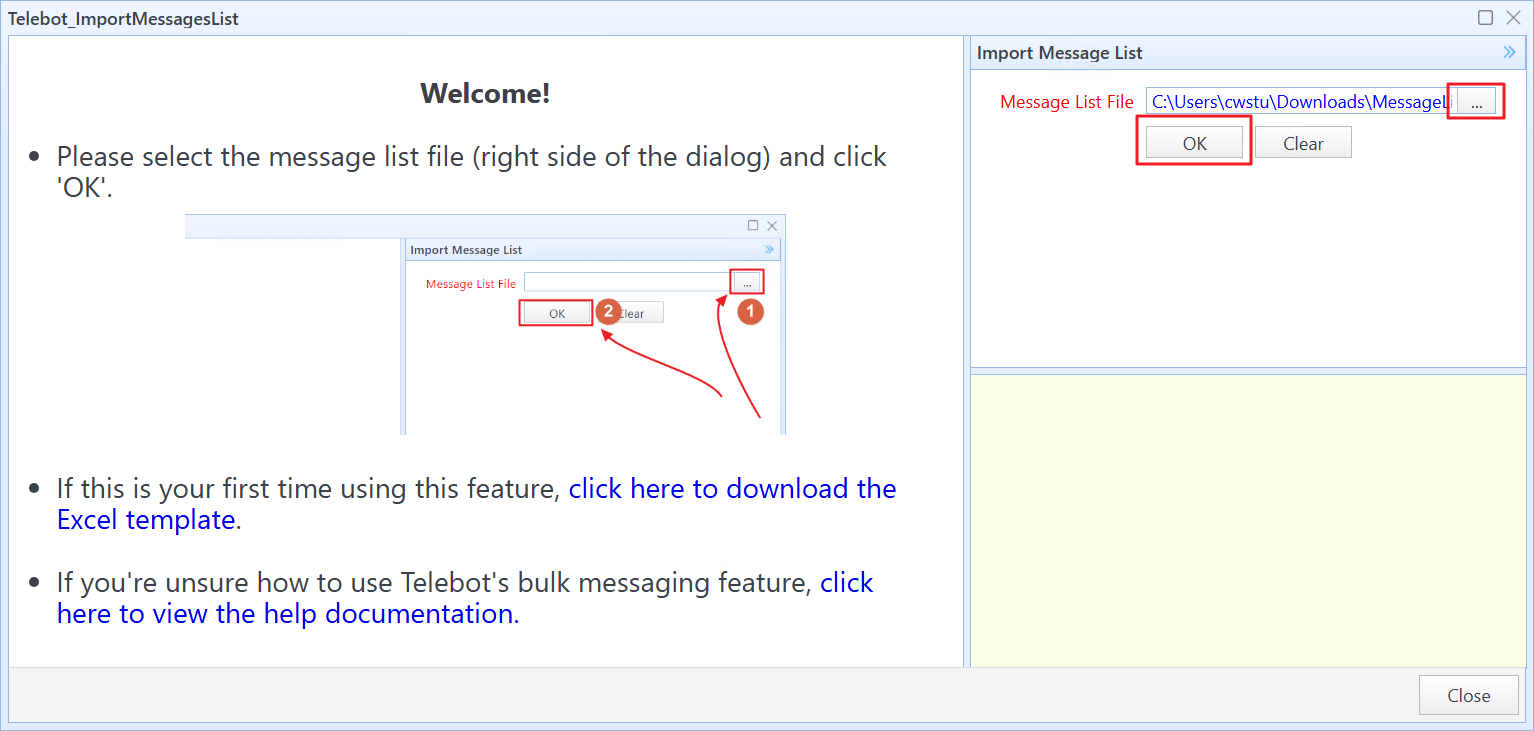
Step 3: Select the Excel sheet created in Step 1 and click OK.
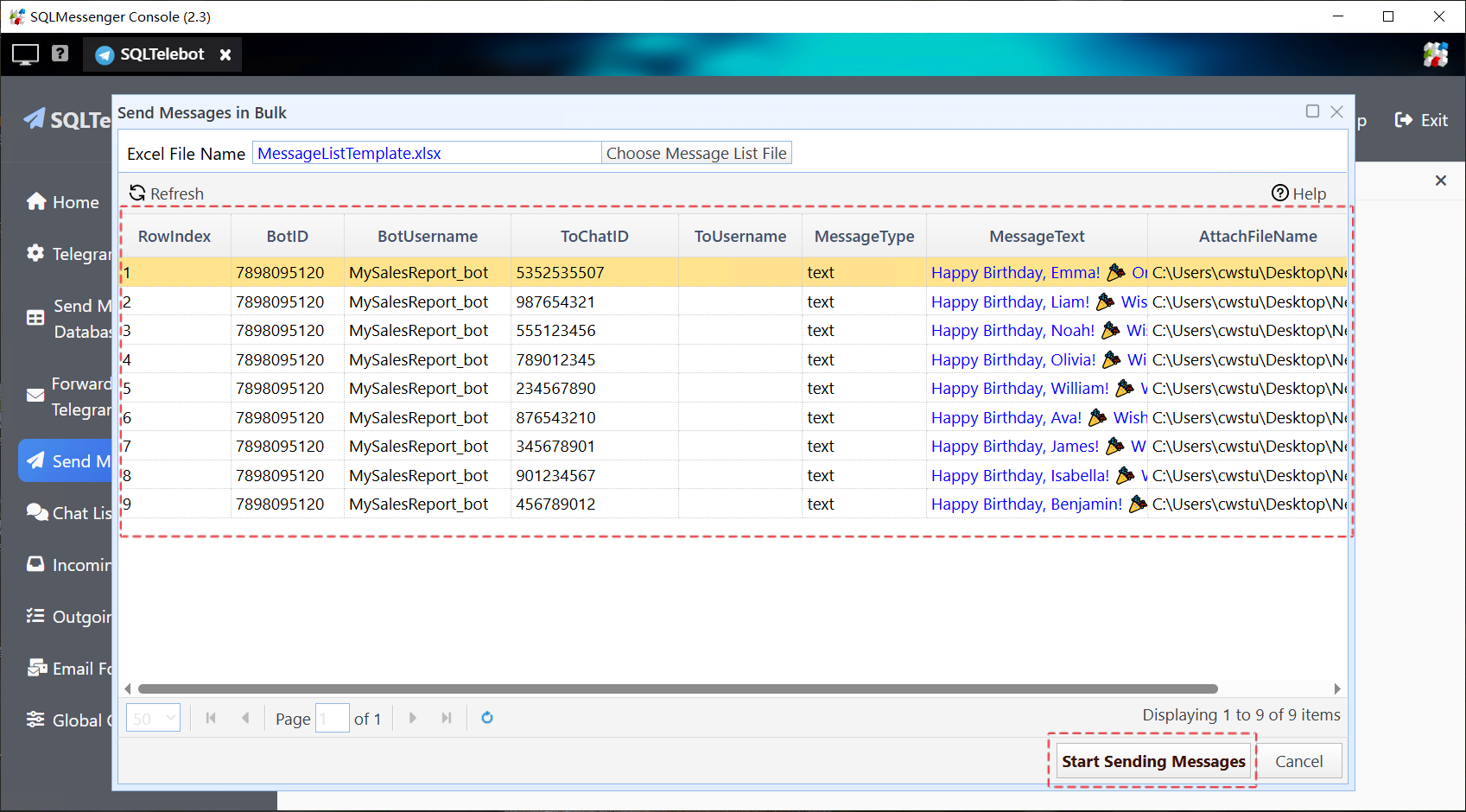
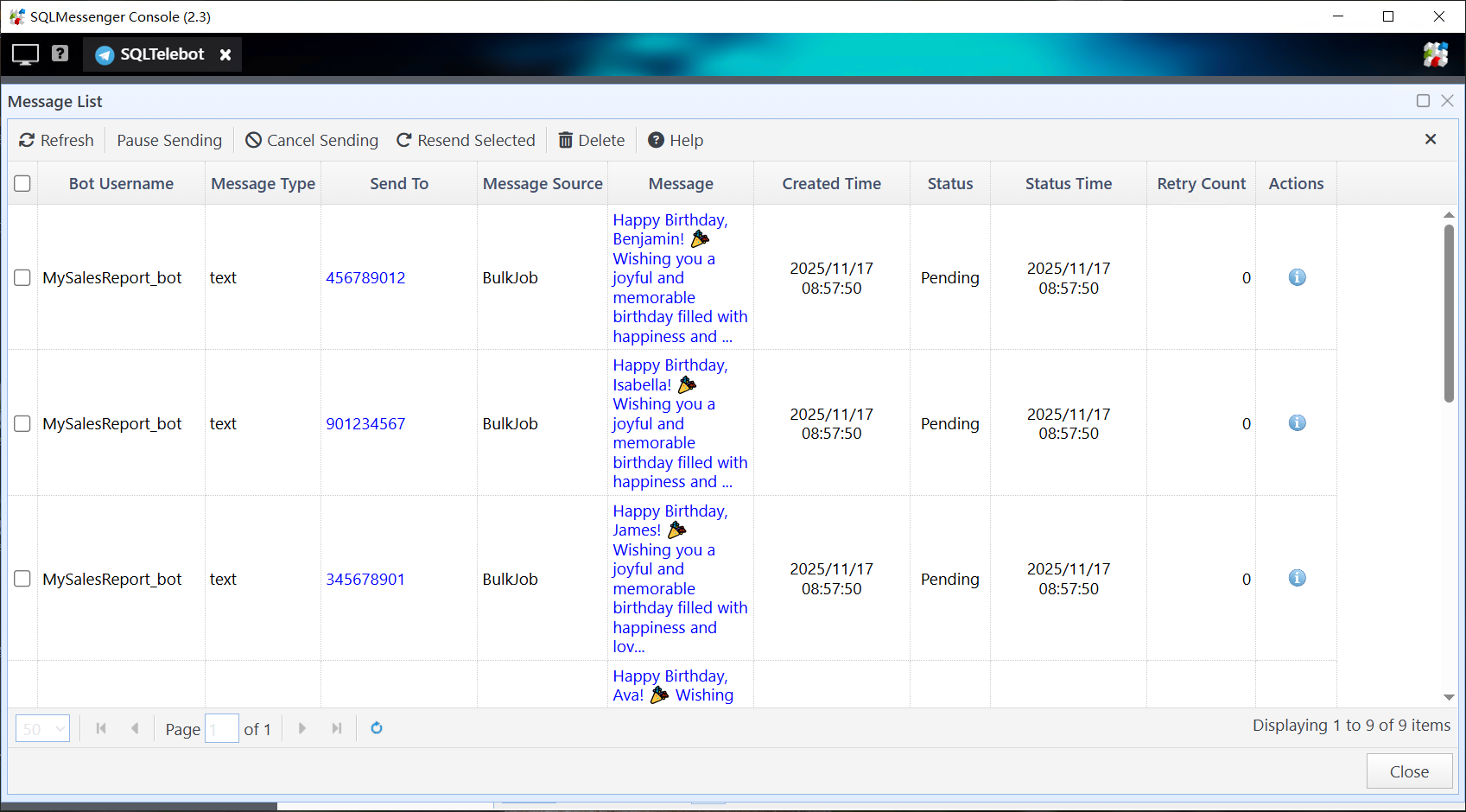
Step 4: Review the generated message list to ensure the content is correct. Once confirmed, click Start Sending Messages. SQLTelebot will then add all messages to the sending queue and begin sending them.
For detailed instructions on sending messages in bulk using SQLTelebot, click here: https://www.sqlmessenger.com/manual/plugin-2-send-messages-in-bulk.htm
In addition to sending messages through Telegram, SQLMessenger can also deliver these messages to recipients via email or Slack. For detailed instructions, please refer to the SQLMessenger help documentation, and feel free to contact us if you have any questions.
We are committed to helping you get the most out of SQLMessenger and SQLTelebot.
3. Technical Support
If you run into any issues while using SQLTelebot, feel free to contact us for technical support.
More Use Cases
SQLMessenger can also be used to automate a variety of tasks. Here are some examples:
From Manual to Automated: Improving Report Workflow with SQLMessenger
From Hours of Manual Work to One-Click Reports
Automating Data Workflows with SQLMessenger
From 90 Minutes of Manual Work to One Click: How SQLMessenger Transformed Employee’s Workflow
Automated Email List Cleanup with SQLMessenger and Gemini AI
Transforming Manual Alert Management into an Automated Workflow